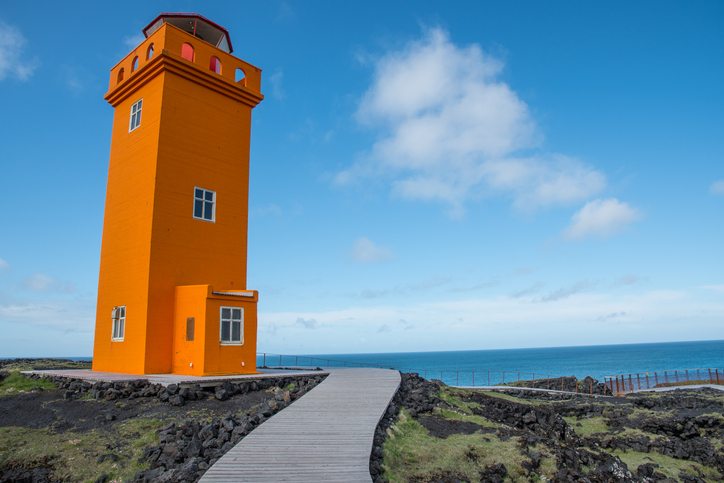
Lighthouse of Svortuloft in Snaefellsnes peninsula in Iceland
Iceland, known for its dramatic landscapes and unique geographical features, experiences a winter climate often perceived as harsh and extremely cold. However, the reality is somewhat different and more nuanced.
Iceland’s climate is primarily influenced by the North Atlantic Current, which brings relatively warmer waters from the Gulf Stream. This oceanic influence moderates the temperatures, especially along the coast, preventing them from plummeting to extreme lows common in other countries at similar latitudes. As a result, the average winter temperature in Reykjavik, Iceland’s capital, ranges from about -1°C to 4°C (30°F to 39°F). This is relatively mild considering its northern geographic location.
Nevertheless, the perception of extreme cold in Iceland during winter can be attributed to several factors. The country experiences very short daylight hours in winter, with the sun barely rising in some parts, leading to prolonged periods of darkness that can contribute to increased coldness. Additionally, the weather can be quite variable and unpredictable. Sudden changes in conditions, including snowstorms and strong winds, are not uncommon. These winds, often coming from the Arctic, can cause the temperatures to feel significantly colder than they actually are due to the wind chill factor.
Moreover, Iceland’s terrain, characterized by glaciers, ice caps, and vast open landscapes, can enhance the winter’s harshness. In areas away from the coast, temperatures can drop lower than in the coastal regions, and snow cover can be more persistent and extensive.
While Iceland’s winter is cold, it’s not exceptionally icy compared to other countries at similar latitudes. The influence of the Gulf Stream, variability in weather, and geographical diversity all contribute to a winter climate that is both challenging and fascinating, offering unique experiences like viewing the Northern Lights or exploring ice caves. The country’s winter weather is more about its distinctiveness and variability than extreme cold.
Svörtuloft Lighthouse
While most travellers would recognize Iceland’s iconic landmarks like the Blue Lagoon or the Gullfoss Waterfall, Svörtuloft Lighthouse, situated on the Snæfellsnes Peninsula in Iceland, does hold a certain level of fame and significance. Its fame and importance are more localized and specific to particular interests, particularly among enthusiasts of maritime history, lighthouses, and the unique geographies of Iceland.
Constructed in the early 20th century, the Svörtuloft Lighthouse is known for its striking appearance and the rugged, remote landscape that surrounds it. The lighthouse stands as a beacon on the westernmost tip of the Snæfellsnes Peninsula. It is renowned for its dramatic coastal cliffs, rich bird life, and the nearby Snæfellsjökull glacier and national park. The stark contrast of the lighthouse’s vibrant orange colour against the backdrop of the black basalt cliffs and the North Atlantic Ocean makes it a visually captivating subject for photographers and nature lovers.
The lighthouse is not just a navigational aid for ships; it’s also a symbol of the maritime heritage of Iceland, a country deeply connected to the sea. Lighthouses like Svörtuloft play a critical role in ensuring the safety of vessels navigating the often treacherous waters around the island. For visitors to the Snæfellsnes Peninsula, the journey to the lighthouse offers an opportunity to experience the raw, unspoiled beauty of Iceland’s natural landscape, a significant aspect of the country’s appeal to tourists.
While Svörtuloft Lighthouse may not be the first destination that comes to mind for many tourists visiting Iceland, it certainly holds a special place for those interested in the more off-the-beaten-path sights. It represents a quieter, more solitary aspect of Iceland’s allure, far from the bustling tourist centres. It offers a glimpse into the rugged and isolated beauty of much of the Icelandic coastline.
A 7-day itinerary near Svörtuloft Lighthouse
Creating a 7-day itinerary around the Svörtuloft Lighthouse area on the Snæfellsnes Peninsula allows for a comprehensive exploration of this diverse and stunning region of Iceland. The itinerary will include visits to natural wonders, charming villages, and significant cultural sites, ensuring a fulfilling experience of the unique Icelandic landscape and culture.
Day 1: Arrival and Exploring Grundarfjörður
Begin your journey by arriving in Reykjavik and driving to Grundarfjörður, a picturesque town known for its proximity to Kirkjufell, one of Iceland’s most photographed mountains. Spend your day exploring the village and visiting Kirkjufell and the nearby Kirkjufellsfoss waterfall. This area offers breathtaking views and is an excellent introduction to Iceland’s natural beauty.
Day 2: Exploring Snæfellsjökull National Park
Dedicate your second day to exploring Snæfellsjökull National Park. Start with a guided glacier hike on Snæfellsjökull glacier, where you can experience the ice cap and learn about its geological significance. In the afternoon, visit the Vatnshellir Cave for a unique underground adventure in a lava tube.
Day 3: Arnarstapi, Hellnar, and Djúpalónssandur Beach
Travel to the coastal villages of Arnarstapi and Hellnar. Enjoy the scenic walk along the coast connecting these villages, admiring the birdlife and rock formations. After lunch, head to Djúpalónssandur beach to witness its dramatic black pebbles and historical shipwreck remains.
Day 4: Londrangar Cliffs and Snæfellsnes Peninsula Exploration
Visit the Londrangar basalt cliffs for their stunning natural architecture and birdwatching opportunities. Spend the rest of the day exploring other parts of the Snæfellsnes Peninsula, including the charming fishing villages and their cultural attractions.
Day 5: Stykkishólmur and Ferry to Flatey Island
Drive to the town of Stykkishólmur. Explore its historic buildings and local museum, then take a ferry to Flatey Island. Spend the day on this serene island, known for its quaint village, birdlife, and walking trails.
Day 6: Svörtuloft Lighthouse and Surrounding Area
Devote this day to visiting Svörtuloft Lighthouse. Enjoy the scenic drive and photograph the lighthouse and its rugged surroundings. Explore nearby hiking trails or relax by the cliffs, observing the ocean and wildlife.
Day 7: Return to Reykjavik
On your final day, make your way back to Reykjavik. If time allows, stop at other points of interest you may have missed on your way to the peninsula. Once in Reykjavik, you can explore the city’s landmarks, such as Hallgrimskirkja church, Harpa Concert Hall, and the old harbour.
This itinerary offers a blend of natural exploration, cultural immersion, and relaxation, allowing you to experience the diverse offerings of the Snæfellsnes Peninsula and its surrounding areas. Each day brings a new aspect of Iceland’s beauty, from its dramatic landscapes and wildlife to its rich history and charming local life.
The average cost of a 7-day itinerary around the Svörtuloft Lighthouse and the Snæfellsnes Peninsula in Iceland requires considering various factors, including accommodation, transportation, food, activities, and additional expenses. Prices in Iceland can be relatively high compared to other destinations, primarily due to its remote location and high living standards.
Accommodation: The accommodation cost will vary based on the type of lodging chosen. Budget options like guesthouses or hostels can cost around $60 to $100 per night, while mid-range hotels might range from $150 to $250 per night. Luxury accommodations can exceed $300 per night. For a 7-day trip, assuming a mid-range budget, you might spend approximately $1,050 to $1,750 on accommodation.
Transportation: Renting a car is the most convenient way to explore the Snæfellsnes Peninsula. A rental car can cost between $70 to $120 per day, depending on the type of vehicle and the time of year. For a week, this could total $490 to $840. Fuel costs and any additional car insurance should also be considered. Ferry trips to places like Flatey Island will cost roughly around $30 to $50 per person.
Food and Dining: Dining in Iceland can be pricey, with casual dining costing around $20 to $30 per meal and fine dining easily exceeding $50. Assuming three meals a day at an average of $30 per meal, the daily food cost could be around $90, totalling about $630 weekly.
Activities and Entrance Fees: Guided tours, such as glacier hikes and cave explorations, can range from $50 to $150 per person. Entrance fees to certain attractions and museums might add up to $10 to $30 daily. Allocating around $300 to $500 for the week for various activities would be reasonable.
Miscellaneous Expenses: Additional costs include souvenirs, snacks, and unexpected expenses. Setting aside around $100 to $200 for the week is advisable.
A mid-range budget for a 7-day trip to the Snæfellsnes Peninsula, including the Svörtuloft Lighthouse area, could range from approximately $2,570 to $3,920, excluding international airfare. It’s important to note that these are average estimates, and actual costs can vary based on personal preferences, travel style, and seasonal variations. Travellers are encouraged to plan and budget according to their needs and book accommodations and activities in advance, as prices can rise during peak tourist seasons.